

The Rug Project. Designing a new way to shop.
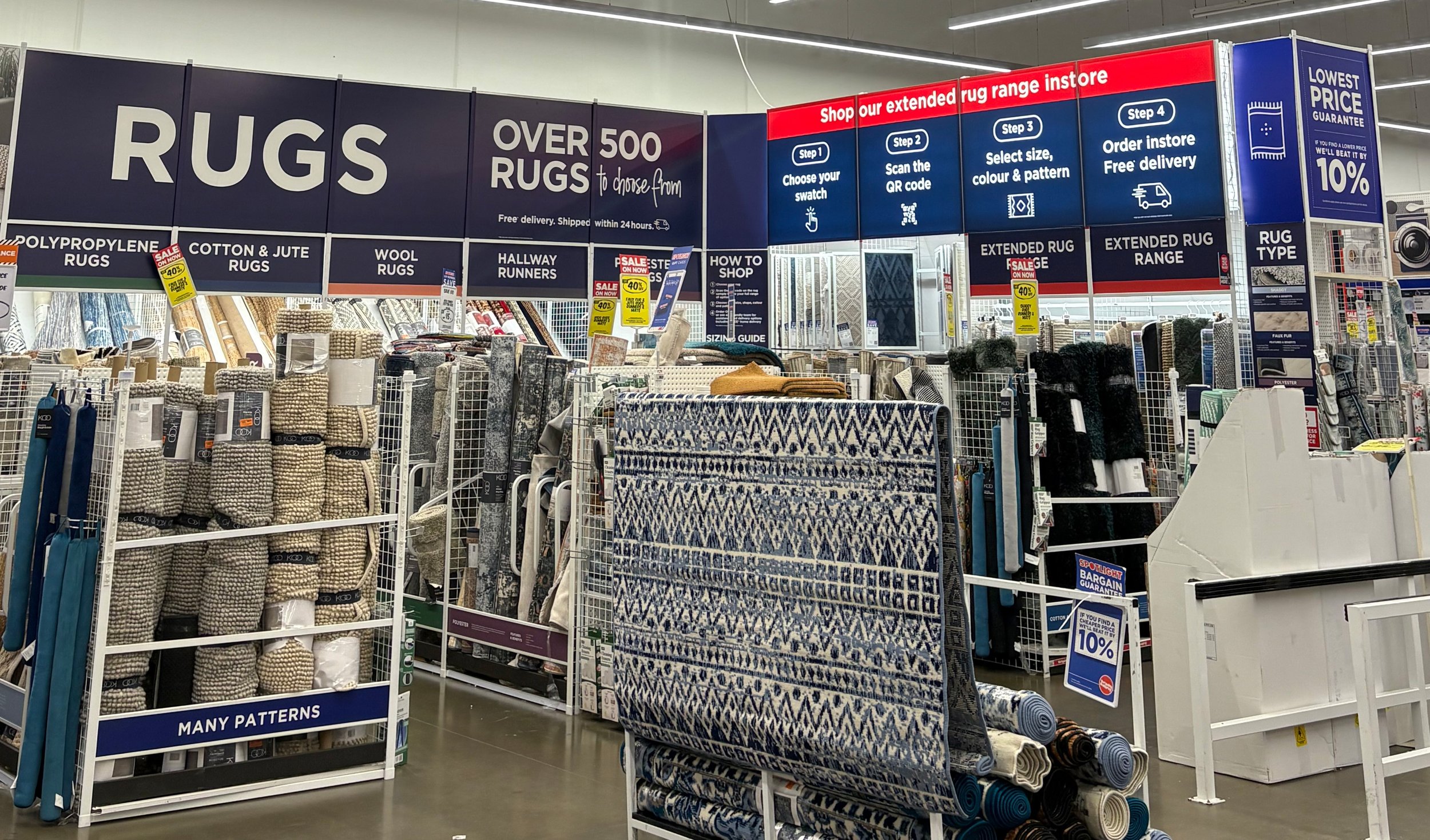
The Brief and the Design Process
The Rug Project was all about designing a new way for customers to shop for rugs. A team was gathered across several departments throughout the Spotlight Support Group to work on developing a new way of displaying and selling rugs within its retail stores, and I was placed in charge of the design and development of all creative aspects of this new project.
To work around all the technical issues that arose in this project, I spent a lot of time measuring, testing, and mocking up my designs to ensure functionality and making improvements where I felt they were needed. This process also allowed me to present full-scale concepts to the other stakeholders within this project and show leadership our plans for discussion and feedback.
Once the final designs and processes were selected, I collaborated with relevant stakeholders to ensure high-quality implementation. Working with the rug buyer and BDM to select the top-selling rugs for display while ensuring a varied range is available. With the property team, to understand the current rug section space in the store and all relevant measurements and design constraints. Store Operations to discuss the ability of the designs to be implemented and scaled up to be rolled out across the wider network. As well as other staff members within the leadership team.
I also developed educational materials for in-store staff to work alongside the store display to help them understand the design and give them the necessary product knowledge to help sell and inform customers, as well as set up a way to provide feedback for those using these designs to foster continued improvements and to help scale sales.
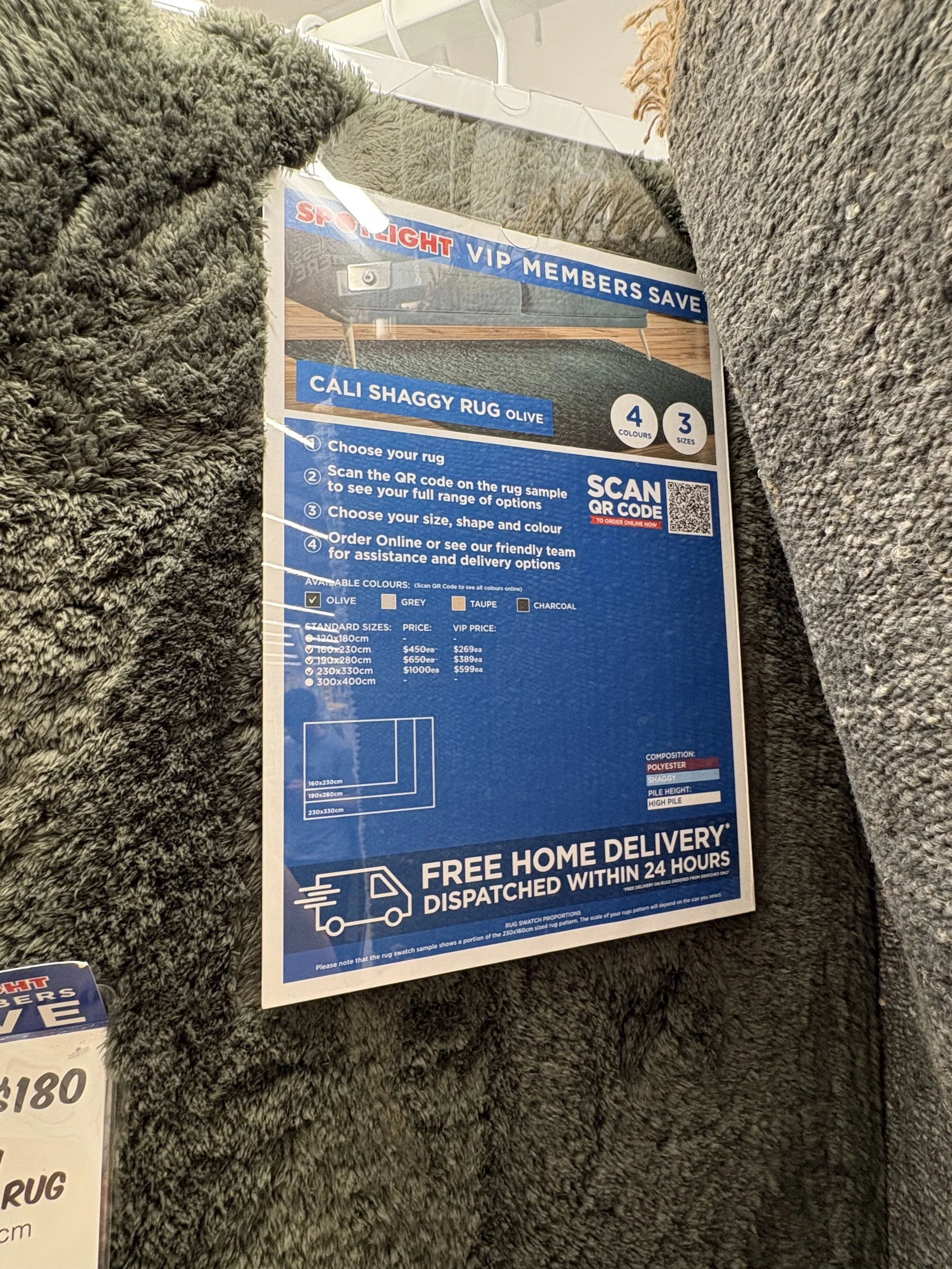
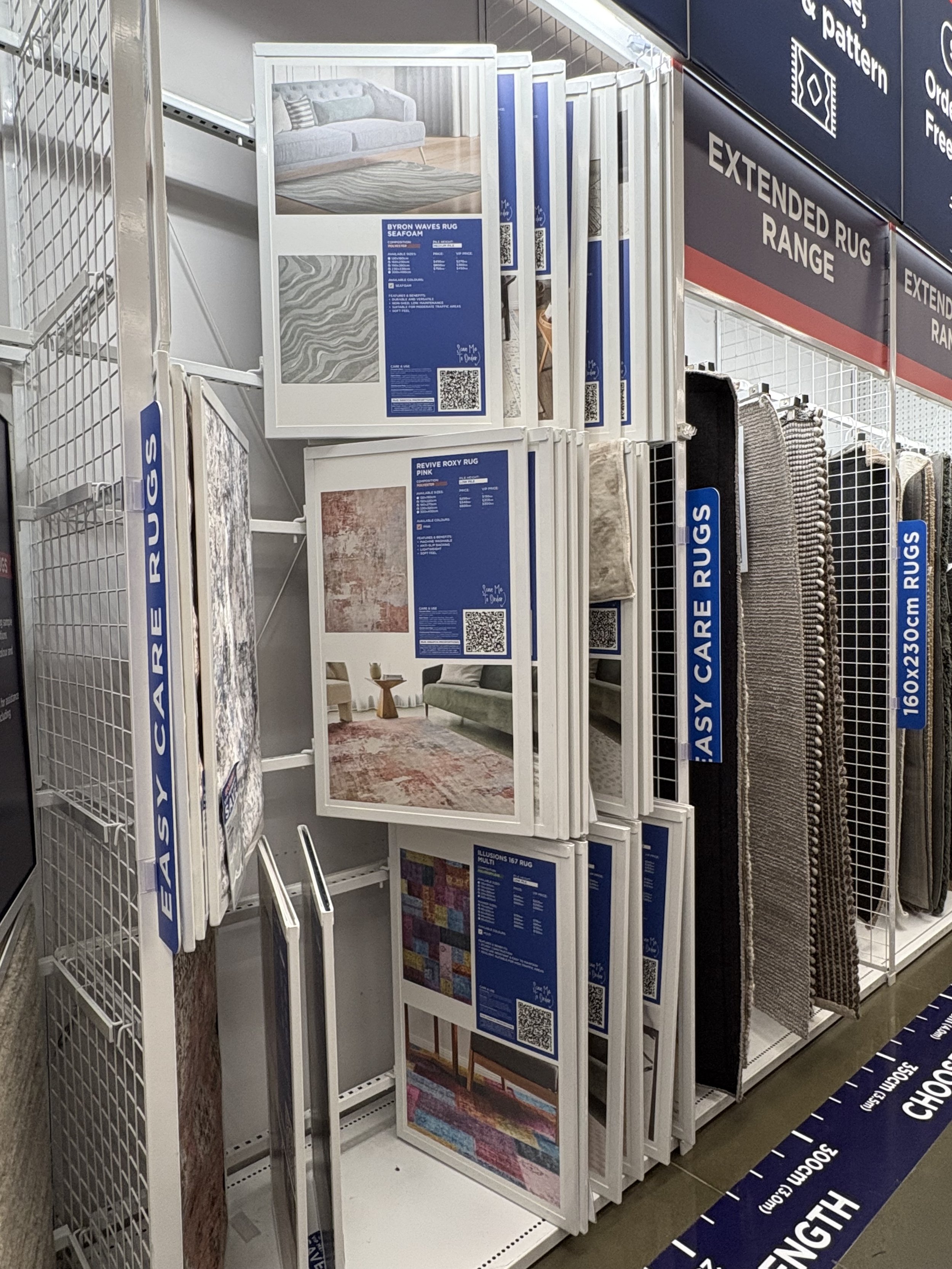
I designed each aspect of the display to be what I like to call ‘the silent salesperson’, making sure all the information a customer should need is readily available for them to make their own decision independently, if staff aren't available to help guide them.
I was given measurements of the bay so I could work out how many rugs could be displayed and still be easily flicked through, along with being easy to read all the information. I also thought about the height of these displays, designing the layout of the backing information in a way that the top row could still be easily scanned by anyone within an average height range, as well as changing the layout slightly so as not to have customers having to bend down too low to scan the swatches on the bottom row.
The information placed on the back of each rug swatch included at least one image of the rug, a plain product image so the full pattern and/or texture could be seen, and a lifestyle image to help the customer imagine the product in their own home. As well as the composition, pile height, available sizes and their pricing, features and benefits, care and use, and a QR Code to easily scan straight through the rug on the website. I felt it was important to include as much information as possible so all the customers could want to know was available to them before they had to complete the extra step of scanning the code.
Pricing and the QR Code were also added to the front of the swatch so the most key information could be seen while assessing the actual swatch, as well as a prompt to view the other side of the frame.
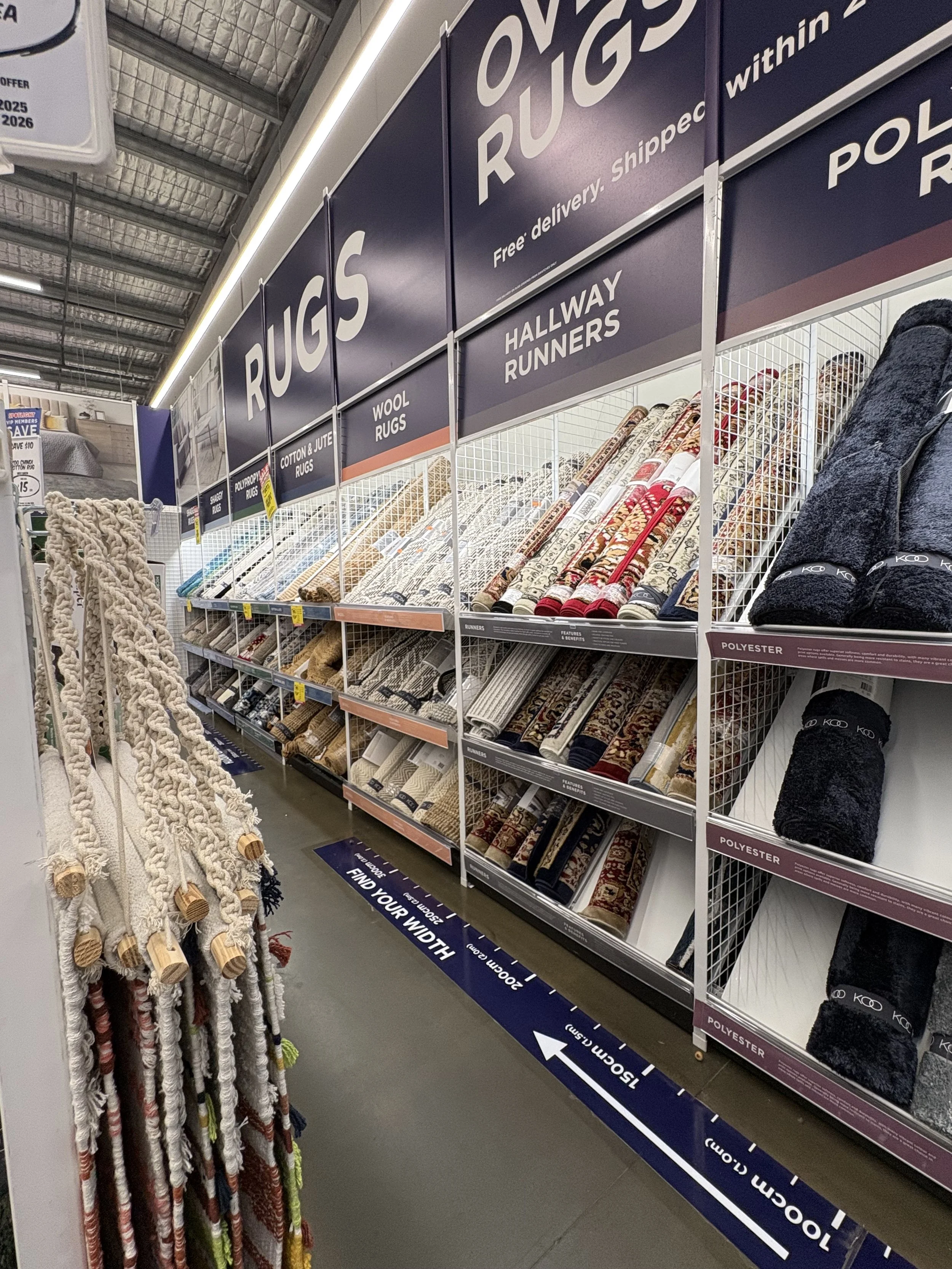
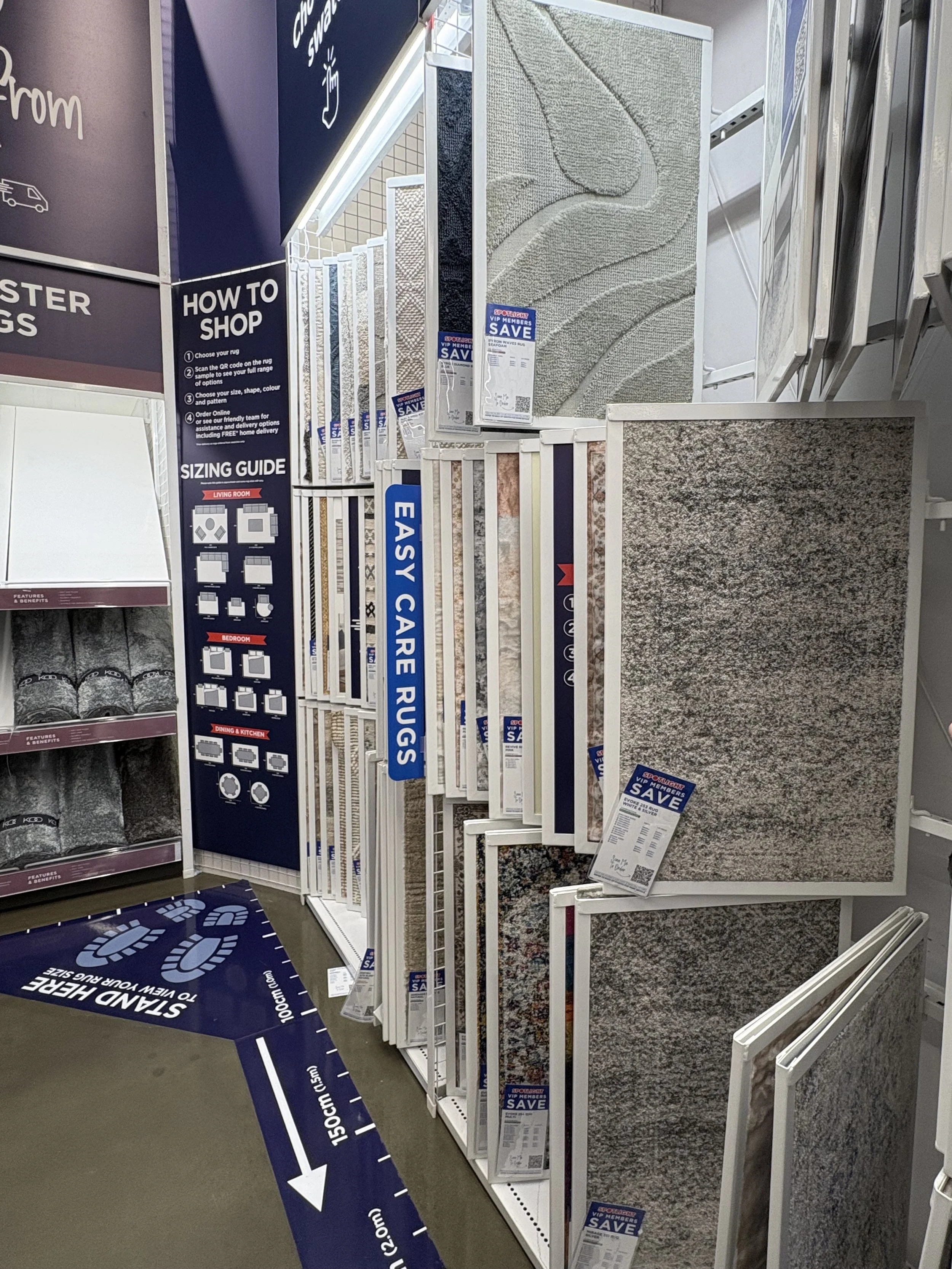
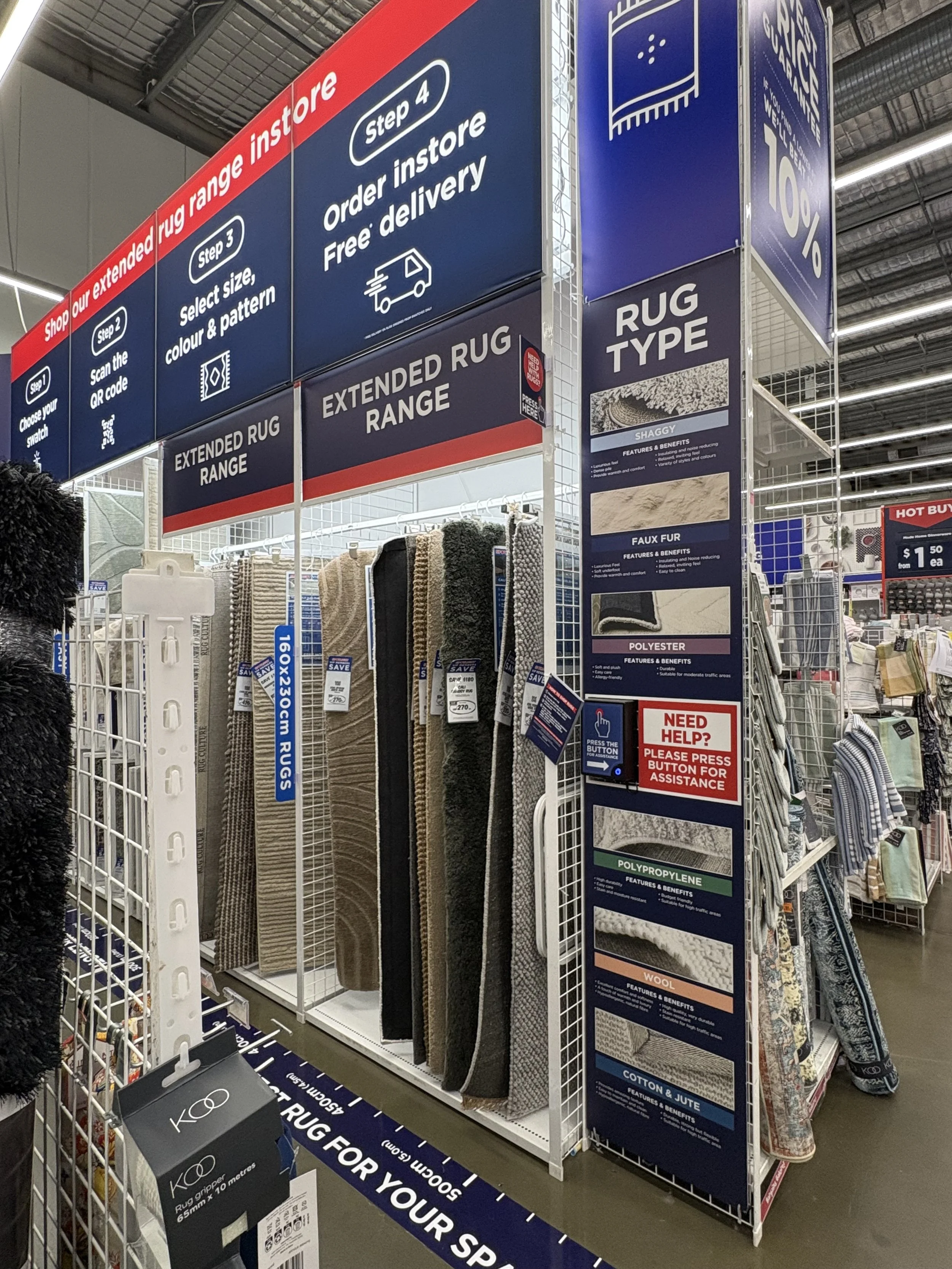
Every decision is shaped by a clear sense of purpose.
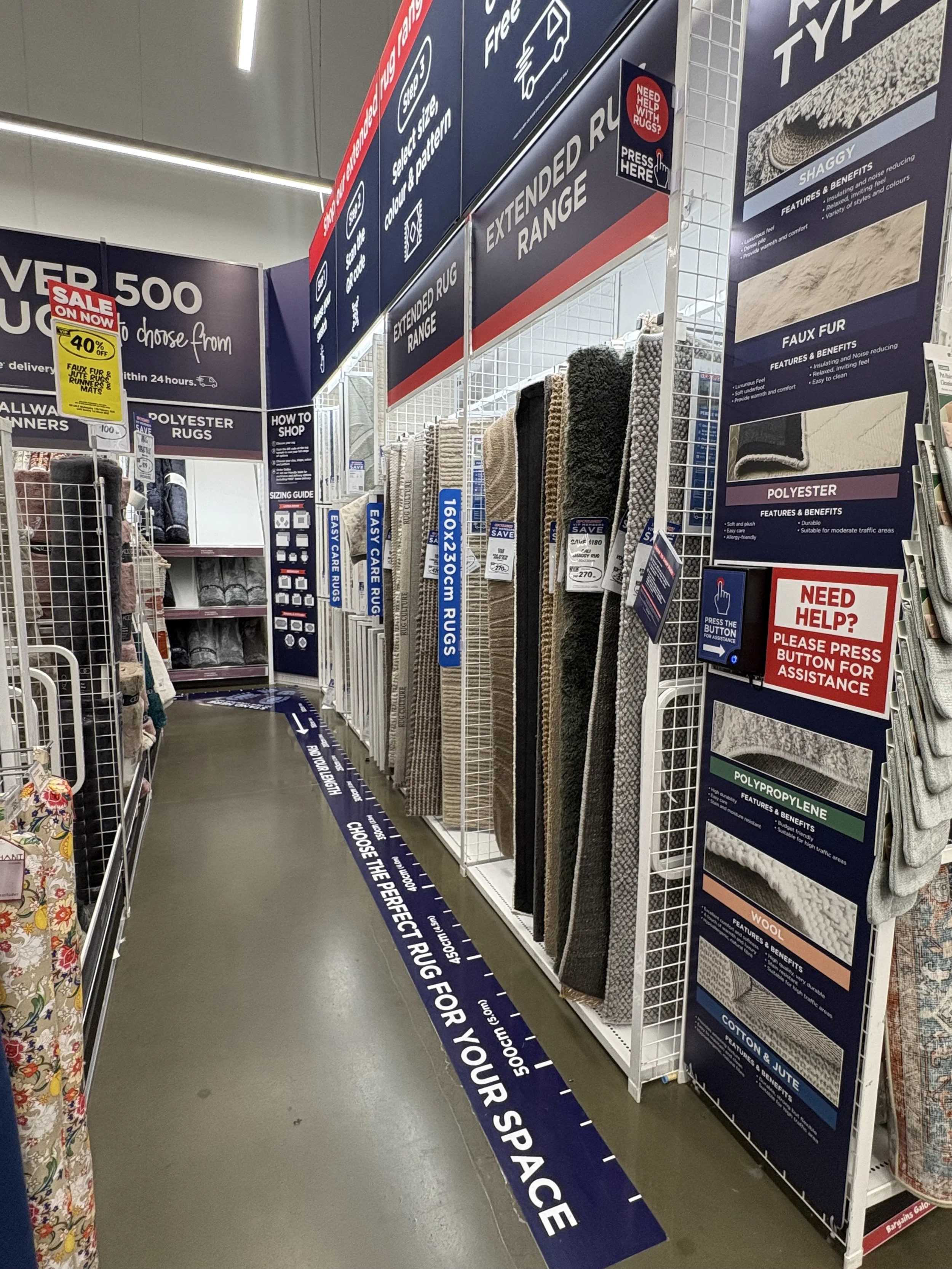
How to Shop - Summarizing the swatch shopping system in 4 easy steps. Choose your swatch. Scan the Code. Select size, colour, and pattern. Order Online.
Colour Coded Materials Guide - All the different types of rug fabrication could be confusing to choose from, so I needed to make sure there was clear information on the fabrications’ differences. Creating a signage display laying out each of the different rug types available, their features and benefits, and which rooms within the home they are best suited to. All parts of this design were colour-coded, relating to the ready-to-shop rugs signage as well as the swatches on display.
Sizing Guide - I created a series of icons showing the most common furniture sizes and arrangements for the living room, bedroom, and dining room, and the rug sizes that best suit each of these possibilities.
Ruler Guide - A ruler was designed to be placed on the ground so the customer could visualize the size of the rug they were ordering. Standing at the corner of the rug section, a customer could look out along 2 rulers to see to see thier lenght and width and visualize the size of their rug purchase.
Additional Help for Staff - To help staff implement this new way of shopping, additional collateral was designed to guide staff on this new way of shopping, as well as provide them with additional information about rugs and steps to help guide customers through a sale.